

Battery Recycling


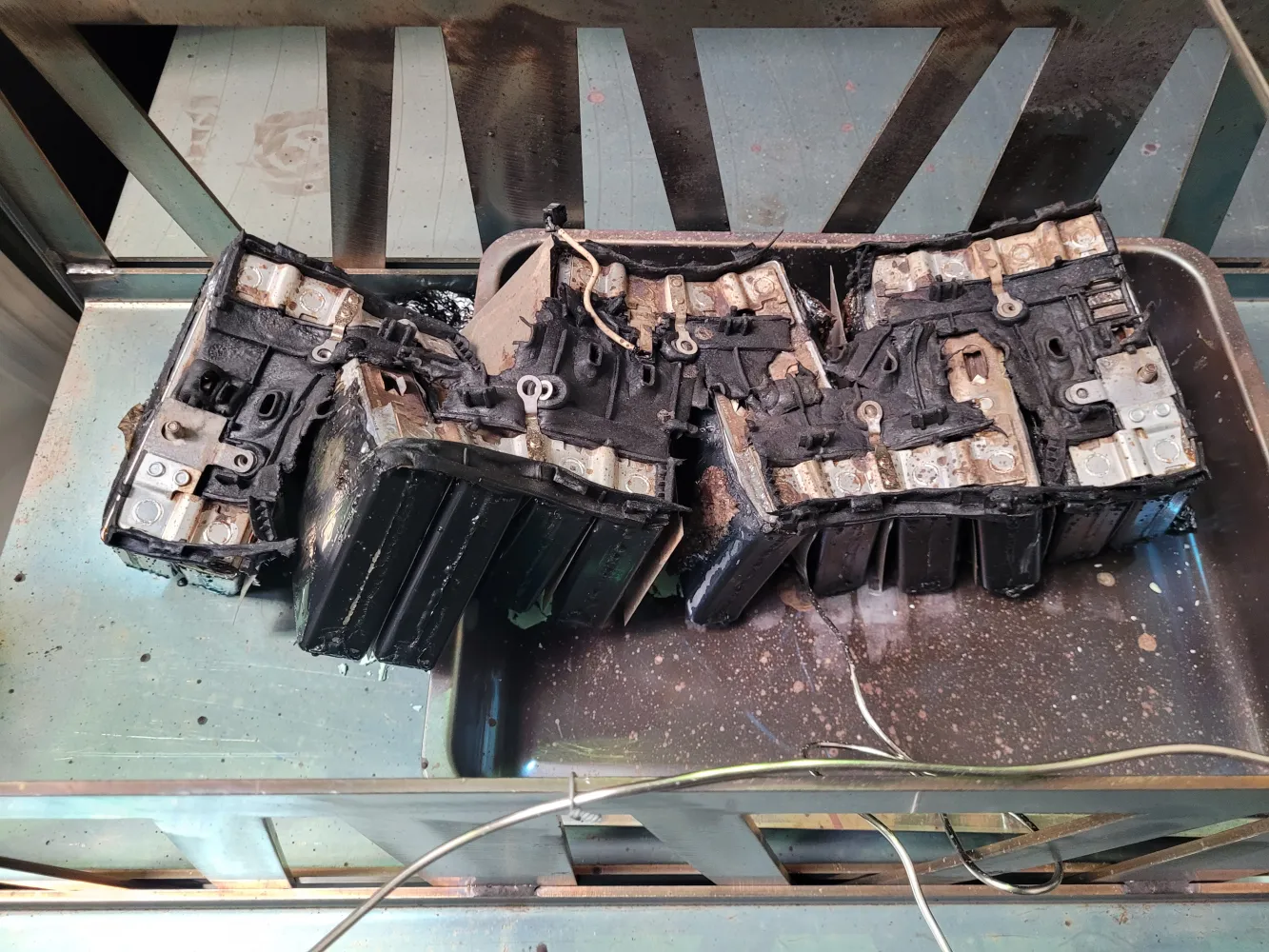

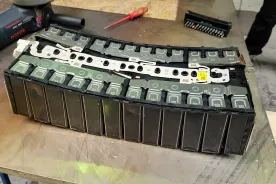
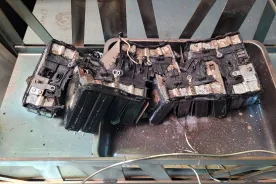
The development of an efficient circular economy for lithium-ion batteries is becoming increasingly important driven by the growing demand from electromobility and the limited availability of critical raw materials. A key initial step in battery recycling is the safe deactivation of battery cells and modules. This is typically achieved through controlled electrical discharge or time-intensive self-discharge in saline solution. However, these methods are not optimal for damaged or unstable batteries, as these pose an increased risk of thermal runaway, ignition, and difficult-to-control reactions. Accordingly, stringent safety requirements apply to the transport and storage of such batteries.
Otto Junker Solutions has developed a thermal solution that enables the controlled deactivation of complete battery modules. In a specially designed batch pyrolysis furnace, the modules are heated under defined process conditions. During this process, the cells open in a controlled manner, volatile components such as electrolytes are evaporated, and the material is simultaneously dried. The furnace is designed to safely withstand pressure peaks that may occur during the opening of the batteries. After thermal treatment, the modules are in a stable, non-reactive state, allowing them to be transported and fed into subsequent recycling processes without increased safety requirements.
The existing system is designed as a batch process and is particularly suitable for applications in research and pilot scale. A demonstrator is installed at an institute of RWTH Aachen University and can be used for trials and process development. In addition to battery deactivation, the furnace can also be used for general batch pyrolysis processes, for example for the thermal conditioning of complex residues.
Initial trials for the deactivation of battery modules have already been successfully carried out, with the modules used being electrically discharged in advance for safety reasons. The transferability to non-discharged or damaged batteries is the subject of ongoing investigations and developments.
Building on the existing batch concept, there is potential to develop continuous furnace systems for higher throughputs. Corresponding concepts are available and can be further developed in collaboration with industrial partners on a project-specific basis. The aim is to achieve a higher degree of automation, improved energy efficiency per module, optimized off-gas treatment, and easier integration into industrial recycling lines.
- Safe processing of damaged batteries

- Cheap deactivation

- Efficient and effective off-gas treatment

Downloads

Contact person

Magnus Sievers
Development Engineer TRT
+49 2473 601-533
+49 151 1419 7464
magnus.sievers@otto-junker-solutions.com